Gardening Islington: Recycling and Sustainability for Greener Gardens
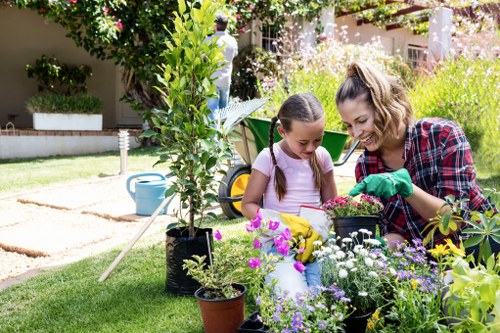 Gardening Islington champions an eco-friendly waste disposal area approach that helps residents, community gardens and allotments reduce landfill and close the loop on garden waste. Our sustainable rubbish gardening area strategy focuses on soil health, composting, and diverting green waste into useful materials. We set an ambitious recycling percentage target to drive action across the borough while supporting practical measures like low-carbon vans and local transfer stations to move materials responsibly.
Our Recycling Target and Local Ambition
We aim for a borough-wide recycling percentage target of 65% by 2030 for household and garden-related waste streams combined. This target balances ambition with realism, reflecting the borough's emphasis on reducing residual waste and increasing reuse, recycling and composting. Local policies mirror many London boroughs' approach to waste separation — encouraging food caddies, separate garden waste collections, and clear signage at shared green waste disposal points to improve capture rates. The success of a green waste disposal strategy depends on partnerships across the supply chain. We work with neighbouring material recovery facilities and local transfer stations to ensure that wood, leaves, grass cuttings and other green materials are processed into compost, mulch and biomass feedstock rather than incinerated or landfilled. These transfer hubs in north London and nearby boroughs act as critical nodes in our circular approach to garden waste recovery.
Practical Recycling Activities in the Borough
On-the-ground recycling activity includes kerbside garden waste collections, communal composting sites at community gardens, and drop-off points at recycling centres for bulky organic items. We promote a mix of home composting, community-scale aerobic piles, and formally processed green waste. Separation at source — leaves and small brush in one stream, woody material in another — increases the quality of recyclate and supports high-value reuse.To make participation easy, we provide clear information on what belongs in each bin and how to prepare bulky garden materials. Our guidance endorses shredding large branches before drop-off and avoiding contamination such as plastic bags in green bins. A practical list of priority actions includes:
- Separate garden waste, food scraps and recyclable packaging at source.
- Use local green waste drop-off points and community composters.
- Donate reusable planters and topsoil through charity partnerships.
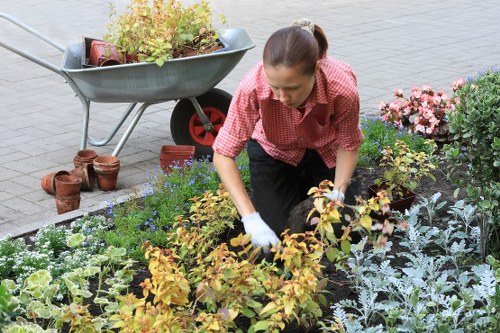 Collaboration with charities and social enterprises amplifies reuse. Local charities collect serviceable tools, pots and raised beds for refurbishment and redistribution to community groups, supporting social value while reducing demand for new materials. Strong links with voluntary organisations also help divert surplus soil, logs and turf to community projects rather than sending them to disposal.
Low-Carbon Logistics and Transfer Stations
Transport is a key part of a low-impact green waste strategy. Our fleet strategy emphasizes low-emission, low-carbon vans and electric vehicles for collection runs between community sites and transfer stations. These vehicles reduce local air pollution and lower the carbon footprint of moving garden waste to composting and processing facilities. Where heavier loads are needed, we prioritize vehicles running on renewable biofuels or ultra-low-emission standards.Local transfer stations provide the crucial link between collection and processing. By routing materials through nearby transfer hubs we minimise mileage and time on road. The borough uses dedicated routes and scheduled pickups to avoid unnecessary movements, coordinating with neighbouring boroughs to optimise vehicle loads and ensure material recovery is efficient and accountable.
 Implementation of a successful sustainable rubbish gardening area requires monitoring and adaptation. We track recycling rates, contamination levels and tonnages processed at each transfer station. Regular data reviews help refine collection frequencies, improve signage at communal disposal points, and target outreach to neighbourhoods where separation habits are still developing. Continuous improvement keeps the borough on course to meet the 65% recycling goal.
Measuring progress and celebrating wins: we publish annual summaries of green waste diversion, highlight refurbished equipment passed to community growers through charity schemes, and report on the proportion of collections done with low-emission vehicles. A thriving, sustainable garden sector in Islington depends on shared responsibility — from residents and community gardeners to transfer station operators and charity partners — all working to make our eco-friendly waste disposal areas and sustainable rubbish gardening areas a model for inner London.